10 months ago, I packed up my life and set off on what I thought would be three or four months on the road. I knew I wanted to move back up north, but I needed to take some time to figure out exactly where.
I drove from Bergen into northern Norway, along the Helgeland coast and then across to northern Sweden and Finland. Then I returned to Norway, driving up to Senja, Tromsø and Alta, back down to Bodø, across to Lofoten and then up into Vesterålen. I recapped my first two months here, and my month in Finland here.
And a few weeks ago, I drove my worse for wear but still plucky little silver Renault Captur into the small village of Nyksund.

Nyksund is one of a handful of destinations highlighted on the Visit Vesterålen website, described as a former fishing village turned ghost town that has been saved by a group of artists and Arctic enthusiasts and is now heralded as “Vesterålen’s biggest tourist magnet.”
Nyksund was once an important cod fishing hub, but the arrival of larger motorized boats made the small harbor impractical, and fishing activity shifted to nearby Myre. In 1975 the government used relocation subsidies to move the remaining residents, which left Nyksund completely abandoned until a German social project began to restore the village in the mid 1980s.
I arrived in Nyksund prepared to love it, but I later drove the hour back to my Airbnb in silence, sorting through my feelings about Nyksund as if trying to solve a puzzle.
The approach into Nysksund is beautiful. The barren, edge of the world type landscape reminds me a lot of the area around Hammerfest in Finnmark, which also happens to be one of my favorite places in Norway.
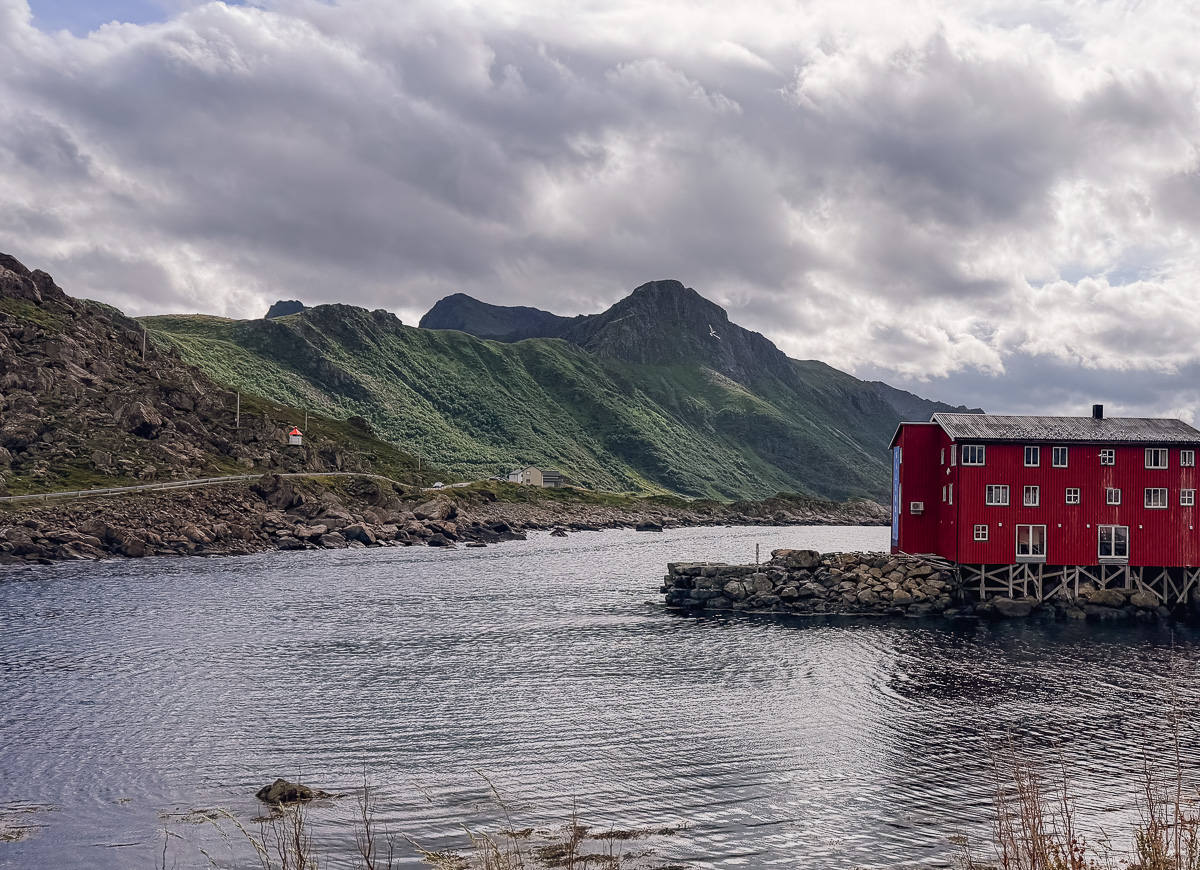
Cars park in a lot right outside of the village, which seems like a good way to earn at least a small sum from visitors. This is also where I first saw local patience with tourists wearing thin, as I walked past someone calling out their pickup truck in irritation at a couple of German tourists who – actually I don’t know what they did, but I’m sure it was annoying.
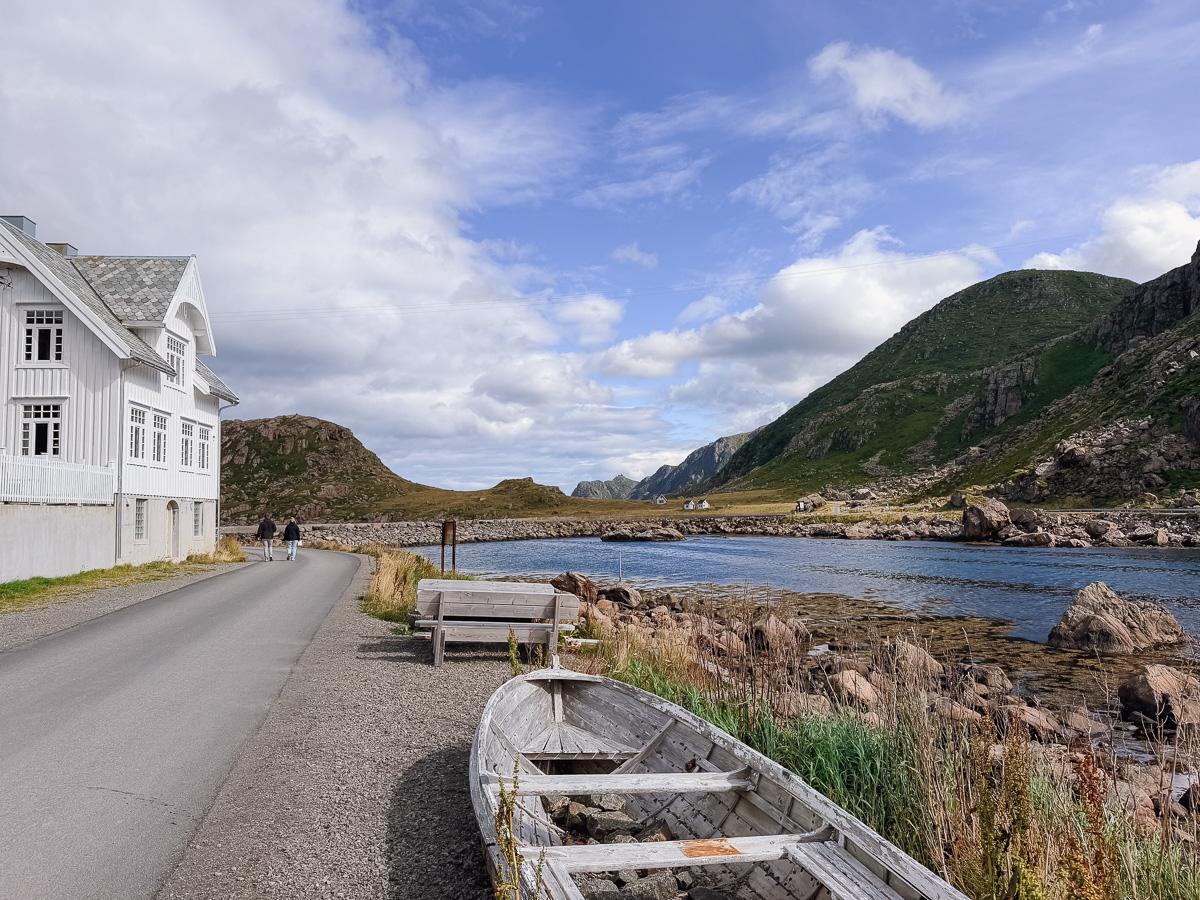
The village itself is so cute, with cafés, restaurants, a guesthouse, and even an antique shop and general store along the water. I asked the owners of a beautiful little art gallery if the many for sale signs I had spotted suggested trouble for Nyksund and they said that they themselves didn’t know how much longer they could stay. It costs more to run this place than we make.
At the same time, they’re clearly worried about the rise of tourism in Nyksund, relieved that a luxury Snøhetta-designed hotel project here recently failed to move forward.
Some of their sentiments echoed discussions I had while living in Tromsø, where locals miss the city they knew before northern lights tourism exploded. But what’s interesting about Nyksund is that most of the people who resuscitated this ghost town were outsiders, drawn to living on a near abandoned hillside at the edge of this Arctic archipelago. They were artists and craftsmen eager to get away from it all (not bring it all to Nyksund).
Life in Norway is expensive and sure tourism can help pay for it, but some feel Nyksund has reached a point where tourists take more than they give.
And to drive home the point, as I was driving home, a car zoomed down the single track road towards the village beeping its horn the entire time – perhaps a tourist enjoying the novel tune of her rental car, or more likely a local tired of having to pull over again and again on her lunch break to let visitors pass.

According to my parking app, I only spent 1 hour and 20 minutes in Nyksund, so my impression of the village was fleeting and likely inaccurate. But it raised questions that I’ve continued to ask over my 13 years of travel blogging. Should I be visiting this place? What happens to destinations that rely heavily on tourist income? Why do some tourist towns thrive while others do not?
I wasn’t sure if I would write about Nyksund. On the one hand, it really is a lovely, thought provoking place to visit. I left so puzzled because I care what happens here. Nyksund clearly touched a space in my heart.
On the other hand, I wonder if the people here might ultimately be happier if they’re left alone, even if that means finding other ways to survive. If that’s even possible?
I thought about how the tourist hotspots coping best with tourism typically are the ones whose economy doesn’t too heavily rely it, so they have the privilege of drawing clear boundaries around what they’re willing to offer visitors.
I’ve always shied away from writing about popular tourist destinations. I say that those aren’t the places that inspire me, but perhaps I’m also not often willing to take on the heavy responsibility that comes with writing about somewhere suffering from overtourism.
The thing is, people will visit popular places regardless of whether I write about them, but if I say something helpful I might make those visits more positive – both for the tourists and the locals.
Yes I’m a travel writer to pay my bills, but also because I believe that travel is so valuable, for the visitors and the visited. How many backpackers have joked that if all world leaders had to go on a mandatory gap year before taking office we’d find world peace?
But I also think the same could be said if instead of traveling for a year they hosted Couchsurfers for a year. In my twenties I was so grateful to the people who offered me rides and couches on my travels, but once I settled in Norway and was able to take in hitchhikers and Couchsurfers myself I was equally thankful for time spent with these outsiders.
Sure it feels good to help out, but there’s a specific joy I get from sharing my everyday life, however briefly, with someone who has traveled far to experience it. This is something I had to remind myself while back on the road this year, once again benefitting from the hospitality of locals.

At the end of our conversation in the Nyksund gallery, the owners each handed me their card. We had talked for a long time and they seemed happy to offer to continue the conversation. And maybe that’s the entire point? Yes, I paid an admission ticket, but I also asked them all about their lives and home with the usually curiosity of an outside visitor.
Tourists can be annoying, but they also look at our everyday with awe and wonder, reminding us how special our home is. And through them we get the opportunity to learn about far away cultures, opening our minds to different perspectives and opinions without even leaving our province. And yes, it feels nice to help people, and tourists often need a bit of help.
My mother always said that she didn’t truly appreciate Norway until she moved away. And while that seems hard to believe when she comes from such a beautiful country, anyone who has had a visitor from out of town can relate to the feeling of pride and gratitude when someone expresses joy over what to us is mundane. It’s the best gift we can give when we travel.
What actually struck me most in my conversation with the gallery owners was one of them mentioning that the people in Nyksund don’t have much to do with the municipality. They live on an island, and they live as an island. And I wonder if this could be part of their challenge?
Nyksund offers a remote retreat that I imagine appeals to people who like to live on the outskirts of society – perhaps people who don’t feel they belong anywhere, so they find their own place together. Together. I think that’s the key word here.
Experiencing life from the outside as a tourist visiting a foreign place is an incredibly valuable experience. But the greatest value comes when the outsider shares with the insiders. We talk to locals, bond not just over an exchange of our differences but also over the things we share in common. It’s funny how many trips I’ve taken to far off places only to be most excited about how similar I am to people there.
I think the same applies to life in Nyksund. Sure its residents might be attracted to life on the outside, but maybe there’s something to be said for building a bridge between Nyksund and the rest of the municipality.
Actually that bridge (a causeway) was built in 1959. And actually, I’m not really talking about Nyksund here. I’m talking about myself.
I have loved being on the road the past ten months. I can’t begin to describe the freedom and joy I felt when I first set off from Bergen. And I was surprised by how long that feeling sustained – I started to wonder if I’d be happiest spending the rest of my life a nomad.
When I moved to Bergen I promised myself I would stay for longer than three years, the longest I’ve lived anywhere as an adult. And I was disappointed with myself for leaving just a few weeks before that deadline. I felt that once again I had failed.
Yet I’m so grateful for each of the places I’ve spent a few years of my life. I cherish these experiences of making a home somewhere new, even if they did not last.
While on this road trip I thought a lot about why I so enjoy the role of visitor. It’s a topic I’ve written a lot about over the years (like here, here and here). Tl;dr is that I love the freedom I find in visiting a new place where I am an intentional outsider. I’m not expected to fit in, which lets me be exactly who I am without worrying about who I’m supposed to be.
When I set out in November I thought there was a good chance I would end up back in Helgeland. I loved living in Mosjøen, and I still love writing about all the treasures of the Helgeland coast – a place that many international tourists overlook.
But I think I also loved the way my southern Norwegian relatives raised their eyebrows when I said I was moving there, and the fact that most foreigners I spoke to had never heard of Helgeland, much less visited.
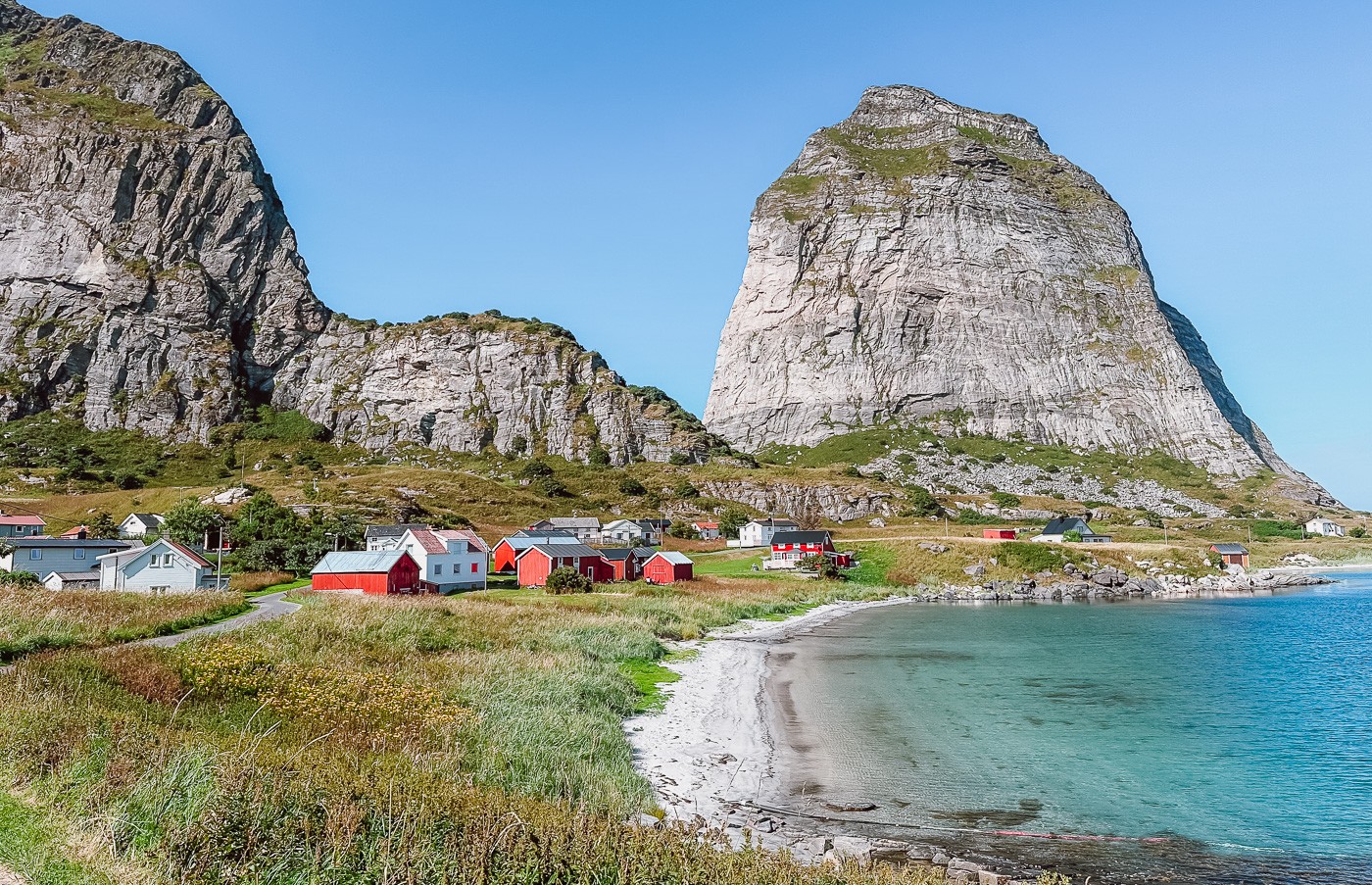
I felt different and cool and unique moving to Helgeland. But of course the price of getting to feel different is having to feel different.
People in Helgeland also raised they eyebrows when I explained that I was self employed and could live anywhere in Norway, so of course I chose Helgeland. And yes I love love love the tight knit community in Mosjøen, but it was tough planting my little baby roots in a ground filled with mature, multigenerational roots.
And so this time around I’ve decided to try going against my outsider instinct and move somewhere that is not that different, not particularly cool, or at least certainly not unique for a travel blogger in Norway to live. I’ve moved to Lofoten.
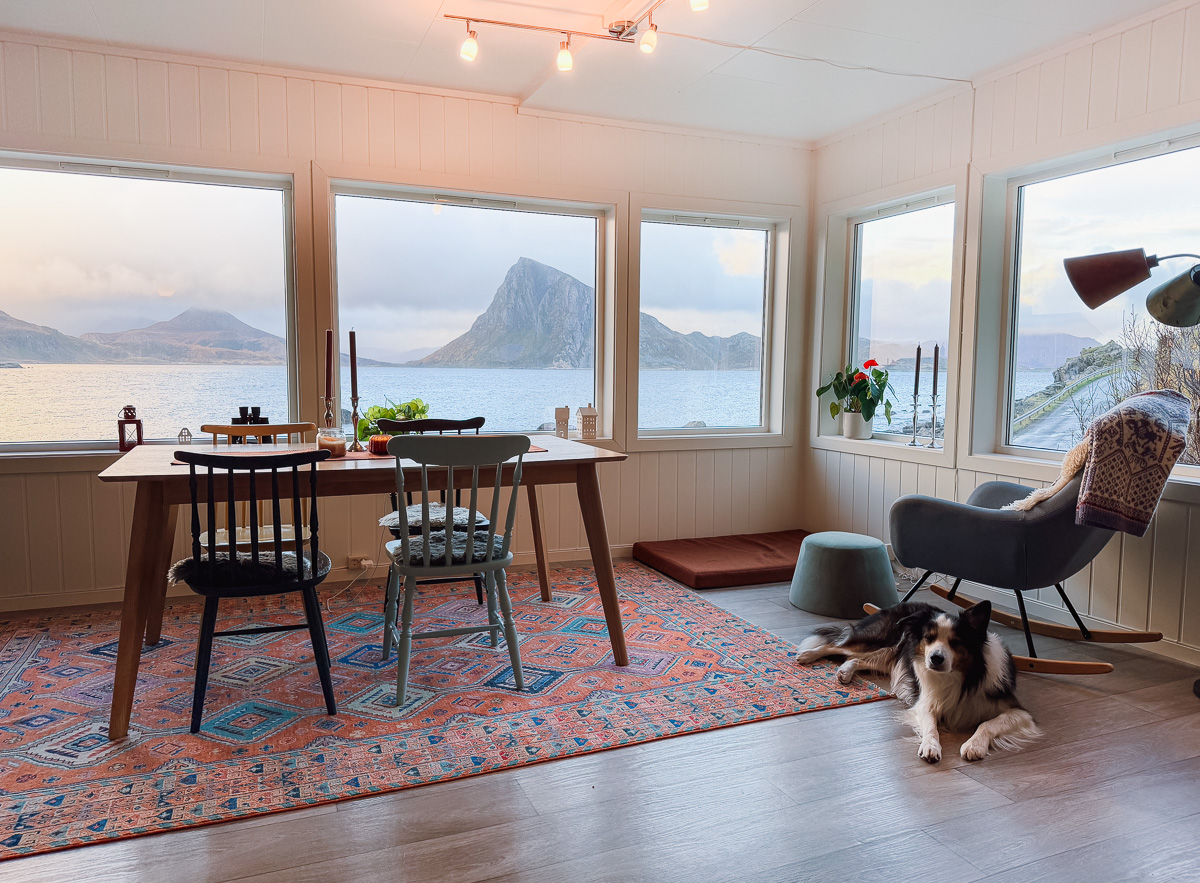
I’ve loved Lofoten for years, but I always dismissed moving here because it felt too cliche, too obvious. But I think it might be really nice to live in a place that has attracted many fellow transplants, as well as somewhere that sees lots of visitors. I’ve spent so much of my life choosing to be an outsider that I think it’s time to take a step inside.
Lofoten might also be the first place I’ve lived that I might not recommend tourists visit (or at least those on a tight budget!). While ironically I am moving here for the travel community Lofoten offers, I do wonder if it’s not the best choice for most visitors these days. With all the tourist crowds here now, you might have a better summer vacation in Helgeland, Vesterålen or Sørøya.
But I’m curious if those feelings change, and if I can find a helpful way to write about Lofoten instead of simply redirecting tourists elsewhere.
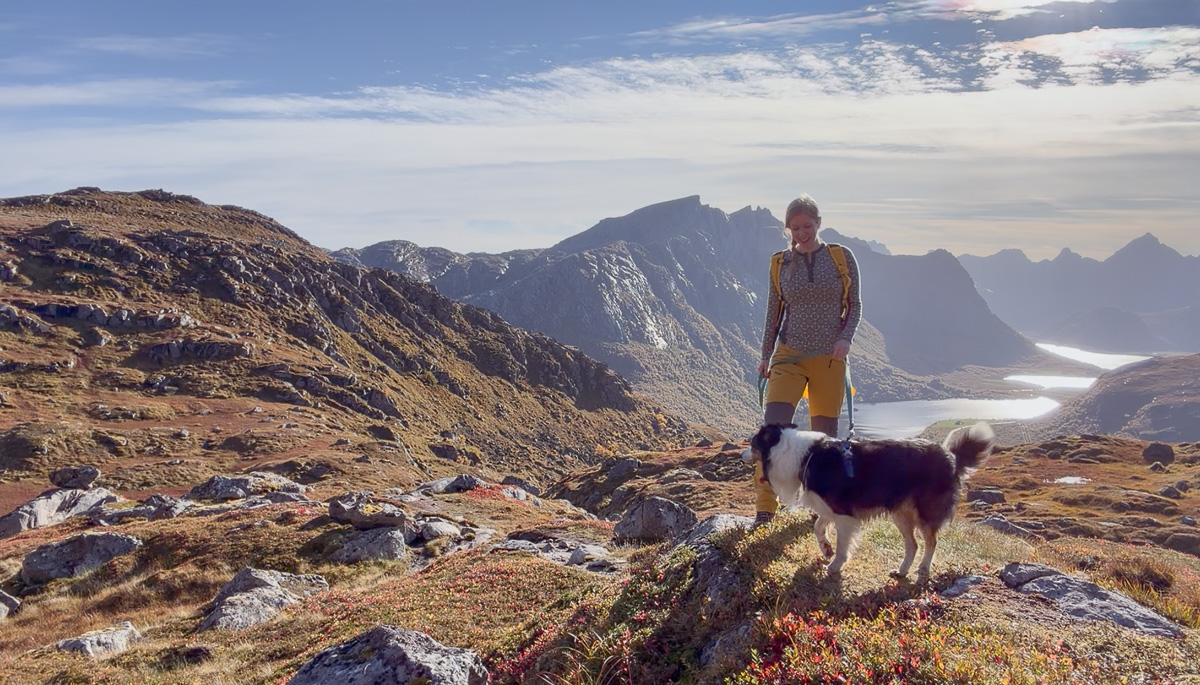
On further reflection, I might have been mistaken in my quick assumption that tourism is hurting Nyksund. Perhaps I even misinterpreted an interaction and made up the rest in my head (I’d honk my horn too if Glimt just won a football match!). Locals are clearly proud of their home there, and I know how wonderful it feels to share a place I’m proud of.
I doubt it would surprise Nyksund residents to hear that I visited for an afternoon and went home and wrote two thousand words about my experience. Nyksund attracts creatives for a reason.
Nyksund is a very special place thanks to its beautiful Arctic landscape. But as I consider why I’m still thinking so much about somewhere I only briefly explored, I suspect what also makes Nyksund an inspiration is the people who chose to bring the village back to life and the people who travel so far to visit it.

Maybe that’s what I was really responding to in Nyksund. Outsiders arrive because they’re fascinated by a place, and insiders get to see their home through fresh eyes. Sometimes that exchange is frustrating, sometimes it’s financially complicated, and sometimes it does more harm than good. But when it works, oh it is so worthwhile.
In a time when more and more of our lives are spent in a virtual world, I think there’s something wonderful about traveling a long way to stroll around a small gallery and talk to a stranger about home.


 The Best Way to Get from Bergen to Oslo
Hannah says
I love this for you! I understand your conflicted feelings over living somewhere touristy, but I hope you do find a way to share more about Lofoten in a way that feels right to you. I love to read more about your life there.
Silvia says
Thanks! I’m excited to be here.
Ariana says
Well you’ve intrigued me, now I’m looking up Nyksund! I think you’re spot on about exchanging with locals when we travel. We can visit a place and only take for ourselves, but the experience is so much deeper when we interact with locals. And I like the idea that they get something from those interactions too. I hope you settle in nicely in Lofoten!
Silvia says
Thank you!